


A Child Discloses Abuse
Common Myths
There are 3 common myths around children disclosing sexual abuse:
1️⃣ A child will tell someone they are being abused.
2️⃣ A child will sit down with a trusted adult and speak.
3️⃣ A child will be believed.
Children are always showing or disclosing something, and it is up to the adults around them to learn what that is. The courage children need to share this trauma is hard to define, but we know it is so big, that most never attempt to do so.
That should tell you something.
A child shows many behaviours, while trying to manage this trauma, sometimes even taking on a role in the family, in the imagined belief it will keep them safe.

These can include:
• The Golden Child - hero or superkid
• The Problem Child - truthteller, seen as defiant
• The Scapegoat - unfairly blamed for the family’s problems
• The Caretaker - looks after everyone, people pleaser
• The Lost Child - inconspicuous, usually ignored
• The Mascot - the clown, uses comedy to cope
• The Mastermind - leverages others to get what they want
By adopting these roles, children are simply trying to have less trauma in their lives.
They mistakenly believe everything is their fault and are trying to do what they can to stop any further damage. They feel responsible for their sibling’s safety, even going as far as enduring more abuse thinking they’re keeping them safe from being abused. They are not.
Impact Felt
This table is designed to show some of the emotions that surface in both children and adults once abuse has been disclosed. It does not, however, list every possible emotion. Please note that a tick indicates an emotion being experienced by either the child or adult.
It is important for parents to accept that guilt is something children feel when they initially disclose abuse. To put it in perspective, it is how they were groomed. They were told it was their fault the abuse occurred at all.
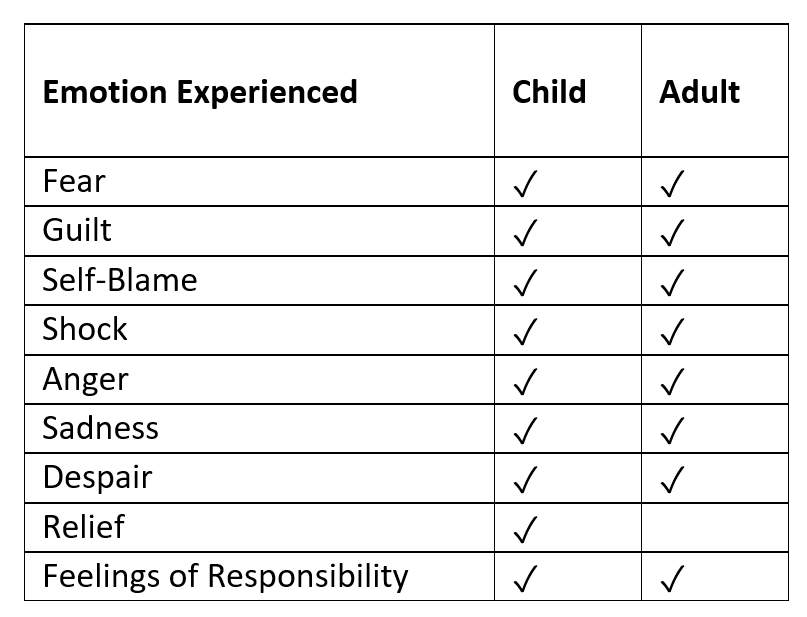
Relief is another strong emotion and something children should feel as they have been able finally, to pass this onto a safe adult. This should be encouraged, as it was never their burden to bear. There is not a parent alive, who regrets believing their child, in fact the most common response I hear is: I wish they had told me sooner. Clearly relief will not be something parents will feel in the early stages, as shock and anger will lead the charge.
If your child shares their abuse with you, they are going to be more hypersensitive and hypervigilant to your reactions. This is completely understandable and needs your understanding.
Be aware, that initially you will go into shock, which is to be expected. Although you will be overwhelmed as well, don’t make the child feel worse by having to observe and try to manage your feelings. This means parking your emotions around the child and softly encompassing them with love and compassion.
When your child is not there is the time and place to release your feelings and get the support you need. Do allow yourself to feel what you need to in whatever way you need to. There is no right or wrong way to process this.
You will naturally want details and further information, but there is time for all of that to happen, just not right now. Apart from keeping your child with you and therefore safe, do not rush in and panic.
Priority #1
Allow the child the comfort of talking to you and be there for them whatever it takes. This will be the biggest secret they ever tell you and the cost is massive for them.
Remember the courage this took to share and that your child was manipulated or threatened to never speak. They are now exposed and feeling it.
Please keep in mind they have known this for possibly quite some time; you have only just discovered it. They told you because they trust you.
Priority #2
• Believe them
• Stay centered
• Ask what they need
• Don’t ask leading questions or interrogate
• Listen
• Comfort
• Provide reassurance
Once your child is feeling more settled your next step is to take some action.
If unsure of how that looks, use the checklist at the end of this chapter and share with a trusted partner or friend. Do not repeatedly interrogate the child, let them rest in the knowledge that you are now taking charge.
The police, school, and other authorities, are usually the first to be informed alongside immediate family.
The checklist at the end of this, will show further assistance, but you may also need a lawyer.
Priority #3
Keeping your child safe and away from further harm.
Consider taking a few days off work to enact next steps, but mainly because your child needs you close by.
If the abuser is known to the family, and has access to them, your first objective is to address this. Police involvement is essential, do not take this into your own hands: Get advice first.
Specific things that may help your child could include:
• Telling the child’s other Safe Adults
• Creating a safety box for the child including:
◦ A favourite toy/object
◦ Something of yours they can smell, like an old t-shirt
◦ A soft ball they can squeeze
◦ Paper and felt pens
◦ Any toys that engage their senses; touch, smell, see etc.
Children need to make sense of what happened, they won’t do this verbally, so by allowing them the 5 senses box you give them comfort in a way that works for them.
Provide nurturing situations: e.g., snuggling up with you on the couch while watching a movie with a soft blanket over them.
You will need to expect regression allow and encourage it as it won’t last forever, but they are feeling extremely vulnerable and exposed. When a child feels this way, they cope by self-soothing and though their behaviour may cause concern allowing them to express it, means they will process it more easily. You may find they even want to sleep in your bed for a couple of nights, please allow this as they are both terrified and traumatised. You may notice your child not wanting to leave your side for the next few days. This is all to be expected and entirely natural, they need to know they are safe, believed and loved by you.
When it feels right share the news with others as it won’t just be your child this has happened to. Research suggests that some predators can have up to 50 victims over their lifetime.
You will feel guilt and although natural, know that it is not your fault. It’s not bad parenting. Your child was targeted, groomed and manipulated to be abused. That is not on you.
This is an incredibly distressing and overwhelming experience for you as a family. As a parent it’s essential to respond to yourself and your child with love, support, and sensitivity.
Further Steps
Contact a Support Service: Reach out to a child protection agency, specialist support service or helpline for guidance on the next steps to take. They can provide you with information on reporting the abuse, legal actions, and accessing counselling services for your child.
Report to the school: In some countries, teachers are mandated reporters and are legally required to report suspected child abuse.
Be Patient: Healing from sexual abuse is a journey that takes time.
Offer emotional support and let them know you are there for them when they you.
Seek Professional Help: Reach out to a qualified therapist or counsellor experienced in working with child abuse. Therapy can provide your child with a safe space to process their emotions and cope with the trauma.
Seek Medical Attention: Depending on whether:
◦ This is acute - it took place within the last 10 days
◦ This is non-acute - it took place over 10 days agoYou may want to take your child to a healthcare professional for a medical examination. Even if there are no physical injuries, a medical evaluation can provide documentation of the abuse and address any potential health concerns. This not only ensures their physical well-being but also provides evidence if legal action is required.
Educate Yourself: Find out about child sexual abuse, its effects, and the recovery process. This will help you understand and support your child.
Practice Self-Care: Caring for a child who has experienced sexual abuse can be emotionally taxing. Don’t forget to take care of and seek support for yourself.
Support Groups: Consider joining a support group for parents of sexually abused children. Talking to others who have experienced similar situations can be helpful.
Legal Representation: If you wish to, consult with a lawyer experienced in child abuse cases to understand your rights and legal options. They assist through the legal process.
Safety Plan: Develop a safety plan to protect your child from further abuse. This plan may involve setting boundaries, having no contact with the perpetrator, or seeking temporary protective orders if necessary.
Document Everything: Keep detailed records of any conversations, appointments, or actions related to the abuse and its aftermath. This will be useful in legal proceedings
Limit Media Exposure: Shield your child from media coverage or discussions related to the abuse, as it can be triggering and retraumatising.
Safety Measures: Ensure your child’s safety by taking precautions, such as changing locks, setting up security measures, or limiting access to online platforms.
Checklist for Safe Adults
Use the following checklist to note any actions you wish to take, including areas you want further detail on.
▢ Believe and validate, tell them it is not their fault, and you are there to support them.
▢ Stay calm and supportive: Remain calm and composed when your child discloses the abuse, providing a supportive environment for them to share their experiences.
▢ Listen actively to your child’s disclosure without interrupting or judgment.
▢ Avoid pressuring for details about the abuse, let them share at their own pace.
▢ Document the disclosure, including the date, time, and details shared, to aid in further investigation if needed.
▢ Take immediate steps to ensure your child’s safety and remove them from any unsafe situations or environment.
▢ Seek professional help such as a therapist, or child protection specialist, who is trained to handle cases of sexual abuse.
▢ Report the abuse to child protection authorities or law enforcement, ensuring action is taken to investigate and protect your child.
▢ Stop contact with the abuser, taking legal measures to ensure protection if necessary.
▢ Inform your child’s school about the situation, so they can provide support and a safe environment.
▢ Cooperate with law enforcement via the investigation and prosecution of the abuser.
▢ Create a safety plan with your child to establish boundaries and identify safe places.
▢ Seek legal advice with someone who specialises in child sexual abuse cases.